Why Hiring a Tuk Tuk Was The Best Decision We Made

When planning our month in Sri Lanka, we knew one thing - we didn't want to travel by bus or hire a private driver. We wanted the freedom to explore at our own pace, take the scenic route whenever we felt like it and experience the country in a way that simply isn't possible from behind the window of a car.
As regular motorbike travellers throughout Southeast Asia, hiring a tuk-tuk felt like the perfect compromise. It gave us the same feeling of freedom and connection to our surroundings while offering a little more protection from the elements and plenty of room for our luggage.

Driving a tuk-tuk meant we could stop whenever something caught our eye. A roadside fruit stall. A family-run café. A beautiful temple or church. A scenic viewpoint. A quiet village we'd never planned to visit. We weren't tied to anyone else's schedule - our only timetable was our own.
One of our favourite parts was how immersed we felt in everyday Sri Lankan life. We could smell spices drifting from local kitchens, wave to children as we drove through villages, hear the sounds of bustling towns and feel the change in temperature as we climbed into the hill country. It became much more than simply travelling between destinations - it became part of the adventure itself.
Of course, it wasn't always perfect! We took a wrong turn more than once, occasionally tested each other's patience trying to navigate unfamiliar roads, and had plenty of laughs along the way. Looking back, those unexpected detours and little mishaps are some of our favourite memories.
Planning your own Sri Lanka adventure? Before you go, don't miss our comprehensive Sri Lanka Packing List, where we share exactly what we packed for 30 days, what we'd leave behind next time and the essentials that made travelling by tuk-tuk so much easier.
Who We Hired Through
After plenty of research, we chose TukTuk Rental, and the entire experience exceeded our expectations.

One of the biggest advantages was the flexibility. We were able to collect and return our tuk-tuk at different locations, making it much easier to plan our route around the island.
When we reached Nuwara Eliya, we decided to take the famous scenic train journey to Ella rather than drive the winding mountain roads ourselves. The company arranged for one of their drivers to collect our tuk-tuk and all of our luggage, drive it to Ella, and meet us at the station when we arrived.
It was a seamless service that allowed us to enjoy one of Sri Lanka's most iconic experiences without worrying about logistics.
Getting Your Sri Lankan Driving Permit
The application process was straightforward and organised by the rental company before we arrived. Our biggest piece of advice is to double-check the dates you enter on your application. Because we were travelling over New Year, I accidentally selected the following year - a surprisingly easy mistake to make when you're planning a trip months in advance!

Before driving off in our tuk-tuk, we each completed around a one-hour driving lesson.
Kevin mastered it much faster than I did.
Driving a tuk-tuk is surprisingly different from driving a car. The manual gears are operated from the handlebars, so changing gears smoothly takes a little practice. Reverse is another novelty, operated by a lever near the floor, which definitely took some getting used to.
By the end of the lesson, though, our confidence had grown enormously but I wouldn't say our skills, within a day or two on the road, driving felt completely natural.
Surprisingly Comfortable
Before arriving, we wondered whether we'd regret spending an entire month travelling in a tuk-tuk.
The answer? Not for a second.

During the warmer coastal days, it felt like having natural air conditioning with the breeze constantly flowing through the open sides. When tropical rain arrived - or the temperatures dropped in the hill country - we simply rolled down the side curtains and stayed surprisingly warm and dry.
Our two large backpacks fitted perfectly behind the rear seat, leaving enough room for us to travel comfortably every day.
Just remember that tuk-tuks don't have a traditional boot—the engine is located at the rear - so packing soft backpacks rather than large hard-shell suitcases makes life much easier.
What Happens If Something Goes Wrong?
One concern we had before hiring a tuk-tuk was what would happen if we experienced mechanical problems.

Only an hour after leaving Negombo, we suffered a flat tyre. One phone call to the company's 24-hour support line was all it took. They explained exactly what to do and where to have it repaired. Tyres are considered normal wear and tear, so we paid for the repair ourselves before continuing on our journey.
Later in the trip, we discovered our headlights weren't working due to a faulty relay switch. Again, one quick phone call and the team immediately sent us the details of an approved repair workshop via WhatsApp. Because it was an electrical fault rather than general maintenance, the repair cost was fully reimbursed once we returned the tuk-tuk.
At around 1,000 kilometres, the tuk-tuk also required a scheduled CV joint service and greasing. The rental company advised us where to go, what the approximate cost should be and reimbursed the service after we submitted our receipts.
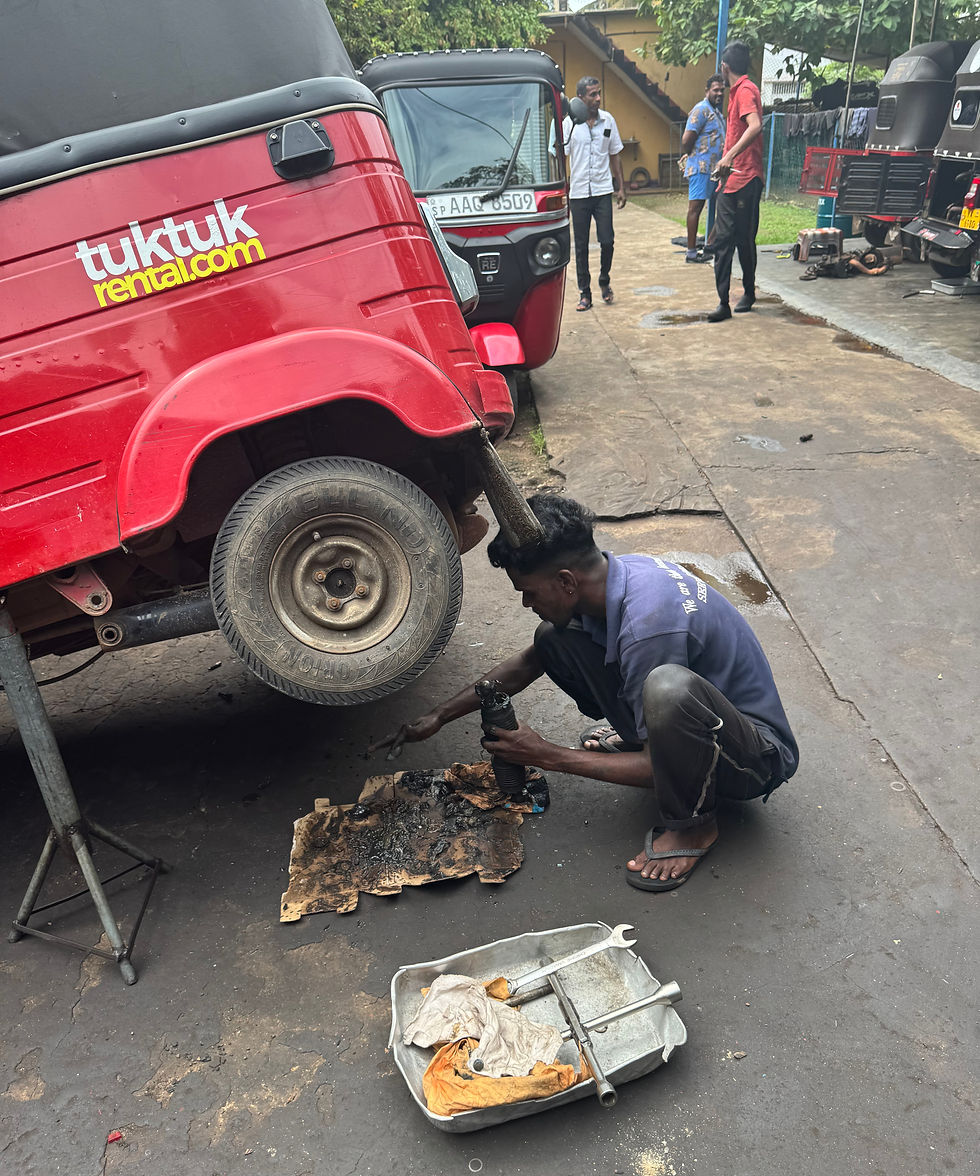
Knowing that help was always only a phone call or WhatsApp message away gave us enormous peace of mind throughout the trip.
Would We Do It Again?
Without hesitation—absolutely.
Travelling by tuk-tuk allowed us to experience Sri Lanka in a way we simply couldn't have from inside a tour bus or rental car. It slowed us down, encouraged spontaneous detours, introduced us to incredible local people and created stories we'll still be laughing about for years to come.
For us, the tuk-tuk wasn't just our transport.
It became one of the highlights of the entire adventure.

Sometimes the best travel decisions aren't about where you go - they're about how you choose to get there. For us, hiring a tuk-tuk wasn't simply transport; it became part of the adventure and one of the reasons we fell so deeply in love with Sri Lanka.
Travelled & Tested by Us
Every destination, accommodation, restaurant and route in this guide was personally experienced by us. We only recommend places we'd happily return to ourselves.


Comments